> For the complete documentation index, see [llms.txt](https://docs.xorosoft.com/llms.txt). Markdown versions of documentation pages are available by appending `.md` to page URLs; this page is available as [Markdown](https://docs.xorosoft.com/xoroerp-1/admin/product/product-customization-profile/managing-product-customization-profile.md).
# Managing Product Customization Profile
A Product Customization Profile defines the customization options available for a product. Once a Product Customization Profile is created, the next step is to associate that profile with the products that require customization. This enables businesses to standardize customization rules while allowing flexibility at the product and variant level.
This guide outlines how Product Customization Profiles are assigned to products and how they integrate with product options and variants within XoroERP.
### Adding Customization Profile to Products
To enable customization for a product, the relevant customization profile must be assigned. This determines the customization options that will be available for that product and its variants. Customization profiles can be assigned using the following methods:
* Product Module
* Upload Products
### Product Module
The Product Module provides a user-friendly interface to configure product details, define variant structure, and assign customization profiles.
To assign a customization profile, follow the steps below:
**Step 1:** Navigate to the **Product Centre** and open the desired product from the products list.
**Step 2:** Locate the **Product Customization Profile** dropdown and select the appropriate profile from the list of available options.
**Step 3:** Click **Save** to apply the changes. The assigned **Product Customization Profile** can be viewed for the product in the Product Centre.
### Upload Products
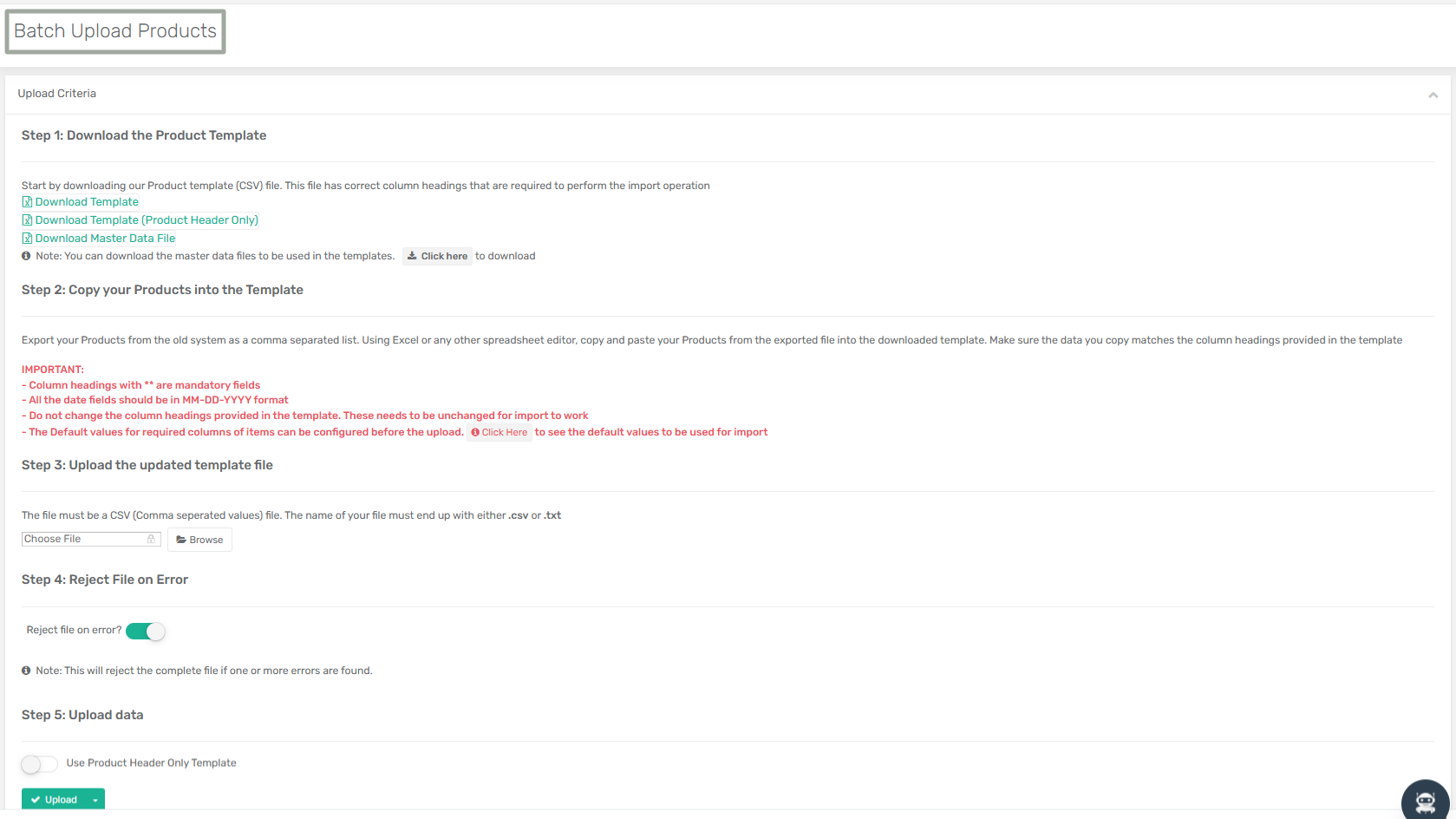
For businesses managing a large inventory, the **Upload Products** feature offers a streamlined way to assign customization profiles to multiple products simultaneously. Here’s how to use this feature:
**Step 1:** Download the **Upload Products** template from the **Upload Products** module.
**Step 2:** Fill in the **Customization Profile** column with the appropriate profile for each product. Ensure that the profile names match those created in the system.
**Step 3:** Save the template and upload the file back into the system.
Once the **Customization Profile** is assigned to the product through either of the above methods (**Product Module** or **Upload Products**), the customization options defined in the profile become available during order placement in the **Sales Order** and **B2B** modules, allowing users to customize the item accordingly.
### Product Customization in Sales Order
In the Sales Order, users can add customization details for items associated with products that have a Product Customization Profile assigned. A **Customization Info** column is available at the line level to manage these details.
Below are the steps to customize an item in XoroERP:
**Step 1:** In the Sales Order, navigate to the **item details** section and add the required item (variant) associated with a product that has a **customization profile** assigned.
**Step 2:** Locate the **Customization Info (pencil icon)** under the **Customization Info** column for that item. Click on the icon to open the **Item Customization** pop-up.
**Step 3:** Enter the required customization details. This may include text or notes, selecting values from dropdowns (**Single Select** or **Multi Select**), or **uploading images**.
**Step 4:** Click **Save** to apply the customization to the item. Once saved, the customization details are reflected in the **Customization Info** column for the item.
The associated **VAS (Value Added Service)** configured in the Header Fields of the [Product Customization Profile ](/xoroerp-1/admin/product/product-customization-profile/creating-product-customization-profile.md#product-customization-profile-header-fields)is automatically applied and displayed in the **VAS Item** column within the item details section, as shown in the image and the GIF below.
{% hint style="info" %}
To **modify the customization**, click on the displayed value to reopen the **Item Customization** sub-form. Users can also click **Remove** within the sub-form to delete any added customization.
{% endhint %}
### Product Customization in B2B
In addition to the Sales Order module, product customization can also be managed directly through the B2B portal. Customers can customize products during the checkout process for items that have a Product Customization Profile assigned.
Below are the steps to customize an item in the B2B portal:
**Step 1:** Add a product (with a customization profile assigned) to the cart and proceed to the checkout page by clicking on the **View Cart** option.
**Step 2:** Locate the **Customization** button available for the item and click on it to open the **Item Customization** popup.
**Step 3:** The fields displayed in this popup are based on the **Product Customization Profile** assigned to the product and reflect the values configured in the profile during setup.
**Step 4:** Enter the required customization details in the available fields (such as image upload, dropdown selections, or notes).
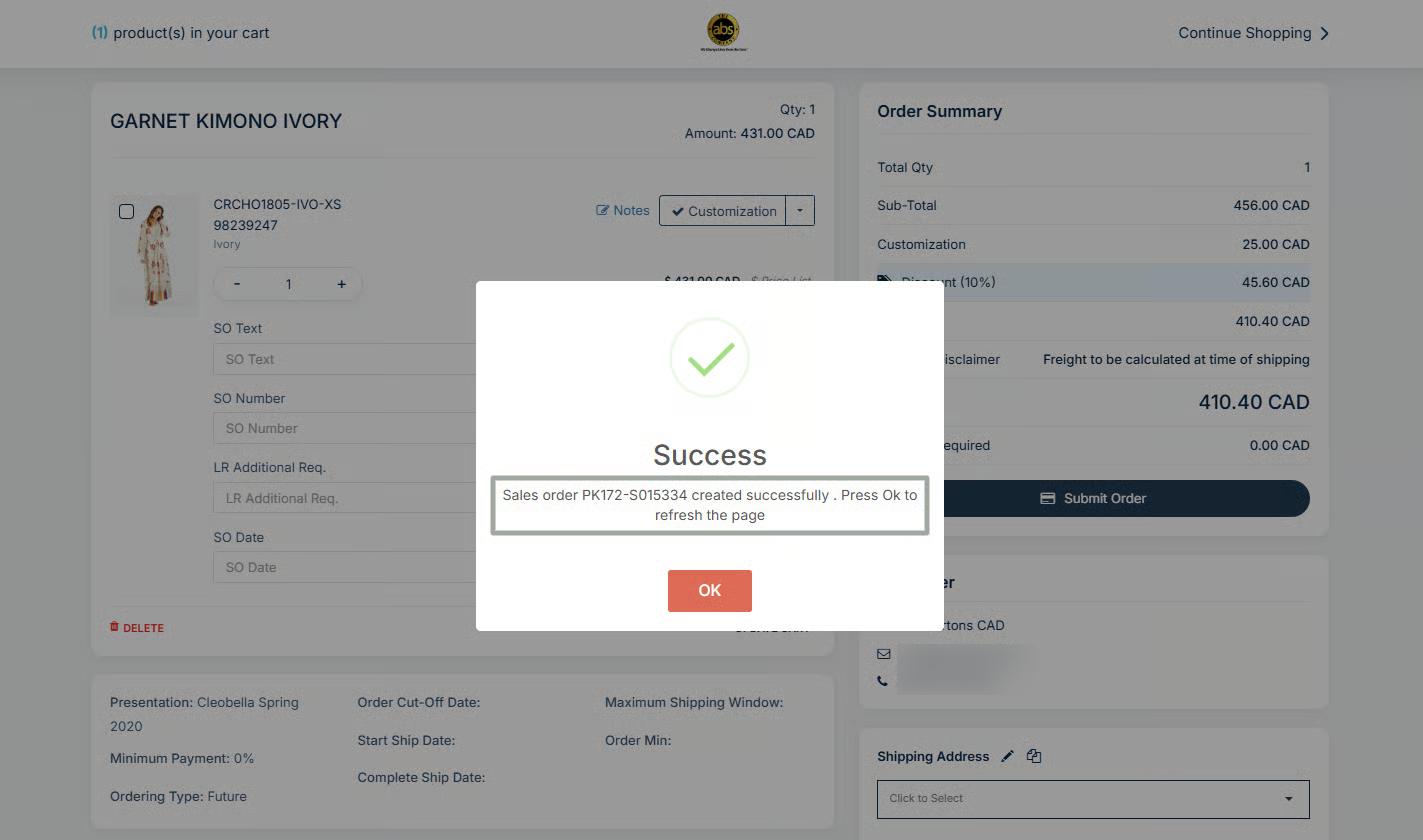
**Step 5:** Click Save to apply the customization and click on **Submit Order** to create the **Sales Order**.
The associated **VAS (Value Added Service)** configured in the **Product Customization Profile** is automatically added to the Sales Order created.
The display of the **VAS amount,** however**,** depends on the following app configuration:
* If the app configuration **"Show VAS Item Total Amount in Separate Summary Line"** is enabled, the VAS amount is displayed as a separate line item in the **Order Summary**.
* If the configuration is disabled, the VAS amount is included within the **Subtotal**.
{% hint style="info" %}
If the "[**Is Mandatory?"** flag](/xoroerp-1/admin/product/product-customization-profile/creating-product-customization-profile.md#product-customization-profile-header-fields) is enabled in the **Product Customization Profile**, customers must complete the customization before proceeding with the order. If customization is missing, a banner message is displayed: **"Product customization data is missing for one or more products."**
If the "**Is** **Mandatory"** flag is not enabled, customization remains optional, and customers can proceed without adding customization.
{% endhint %}
### Applying Customization to Multiple Products
In the B2B portal, customization can be applied across multiple products that have a customization profile. Click the dropdown arrow on the **Customization** button to access the following options:
* **Copy To Selected:** Applies the entered customization to selected products.
* **Copy To All:** Applies the entered customization to all products with a customization profile.
This feature helps streamline the customization process when the same configuration is required across multiple items.
---
# Agent Instructions
This documentation is published with GitBook. GitBook is the documentation platform designed so that both humans and AI agents can read, navigate, and reason over technical content effectively. Learn more at gitbook.com.
## Querying This Documentation
If you need additional information that is not directly available in this page, you can query the documentation dynamically by asking a question.
Perform an HTTP GET request on the current page URL with the `ask` query parameter, and the optional `goal` query parameter:
```
GET https://docs.xorosoft.com/xoroerp-1/admin/product/product-customization-profile/managing-product-customization-profile.md?ask=&goal=
```
`ask` is the immediate question: it should be specific, self-contained, and written in natural language.
`goal` is optional and describes the broader end goal you are ultimately trying to accomplish on behalf of the user. GitBook uses it to tailor the answer towards what is most useful for that goal.
The response will contain a direct answer to the question and relevant excerpts and sources from the documentation.
Use this mechanism when the answer is not explicitly present in the current page, you need clarification or additional context, or you want to retrieve related documentation sections.




.gif?alt=media&token=6e9c472e-5053-43fd-8552-2353ee58b398)




.gif?alt=media&token=68db67aa-af3a-44b5-97dc-cdcbb93ff3a1)